Underground Pathways Planned for Access and Protection
Utility Trenching in Sandy for creating underground routes that accommodate planned utility installations
Properties requiring new utility connections or infrastructure upgrades need trenches that provide adequate depth, width, and protection for buried lines without disrupting surrounding structures or landscape features. Timberline Construction LLC performs utility trenching across Sandy and Clackamas County residential sites, cutting controlled pathways for electrical conduit, water service lines, sewer connections, gas piping, and communication cables as construction projects move from planning to installation phases. Trench dimensions, depth requirements, and routing decisions depend on utility type, local code specifications, and coordination with the contractors who install and connect the actual utility systems.
Utility trenching involves more than cutting a ditch from point to point. Excavation follows planned routes that avoid conflicts with existing underground infrastructure, respect setback requirements, and maintain grades that allow gravity-dependent systems like sewer lines to function correctly. Northwest Oregon's clay-heavy soils and seasonal moisture levels affect trench wall stability, requiring shoring or sloped sidewalls in deeper excavations where cave-in risks threaten worker safety or delay backfill operations.
Request a free trenching estimate to evaluate your property's utility routing needs and coordinate excavation with your construction timeline.
How Utility Trenching Addresses Access and Protection
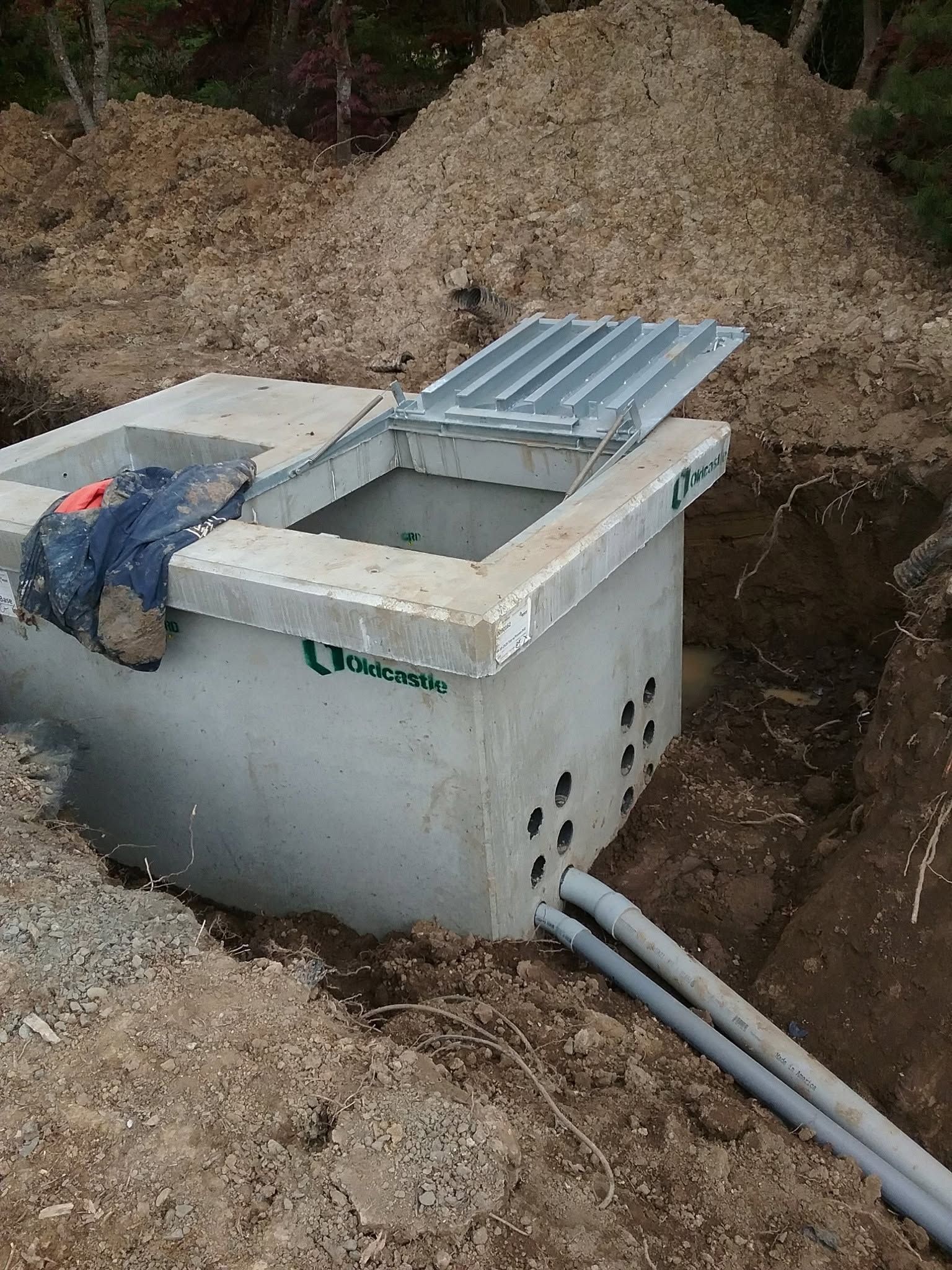
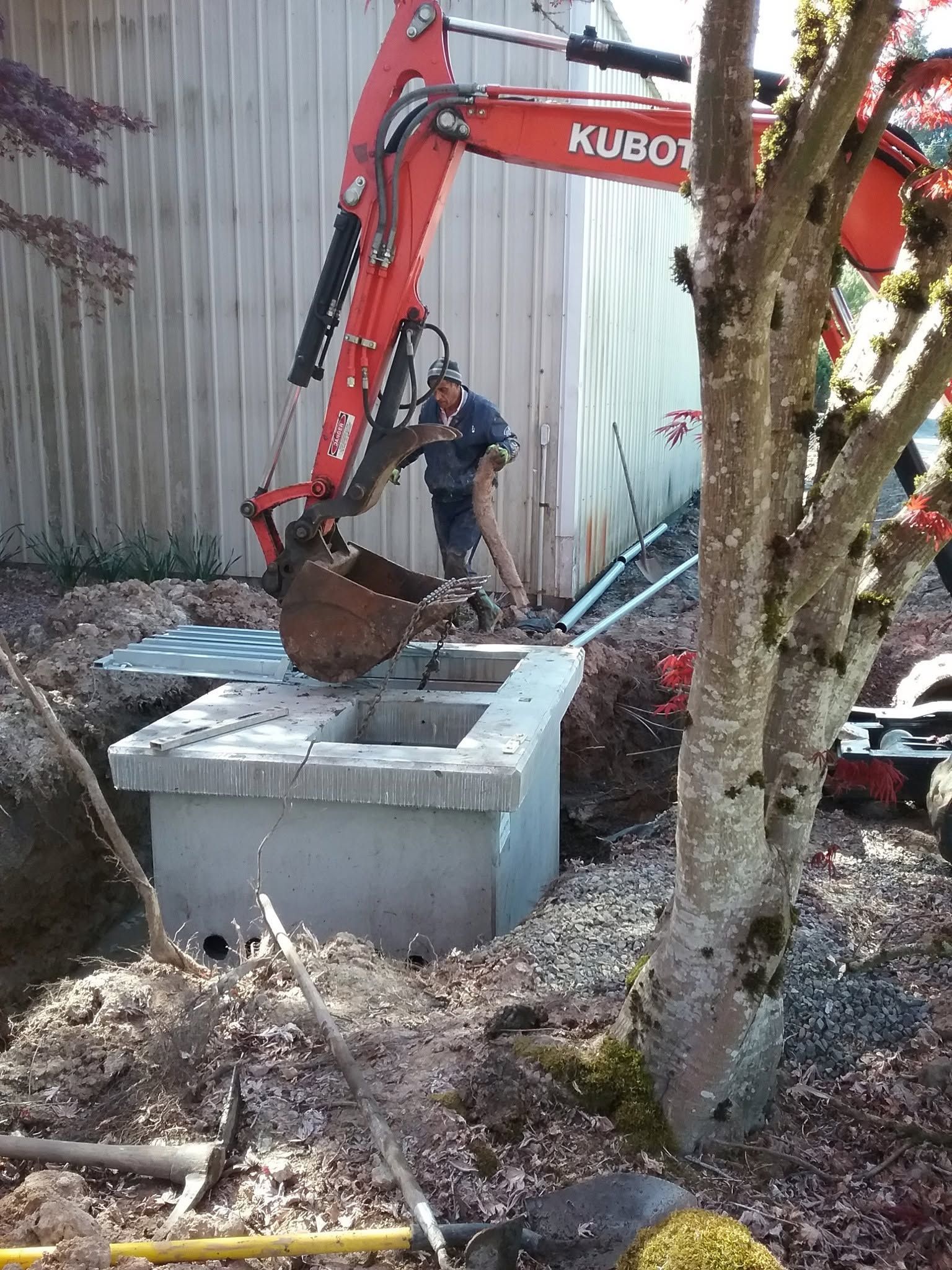
Trenching equipment selection depends on trench depth, length, soil conditions, and site access constraints. Narrow trenches for single utility runs often use walk-behind trenchers or compact excavators that minimize surface disturbance, while wider trenches accommodating multiple utilities or requiring hand-working room for installers call for larger excavators that remove material efficiently and pile it for later backfill. Operators maintain consistent trench depth and width so utility installers achieve proper slope, bedding material placement, and cover depth that protects buried infrastructure from surface loads and frost penetration.
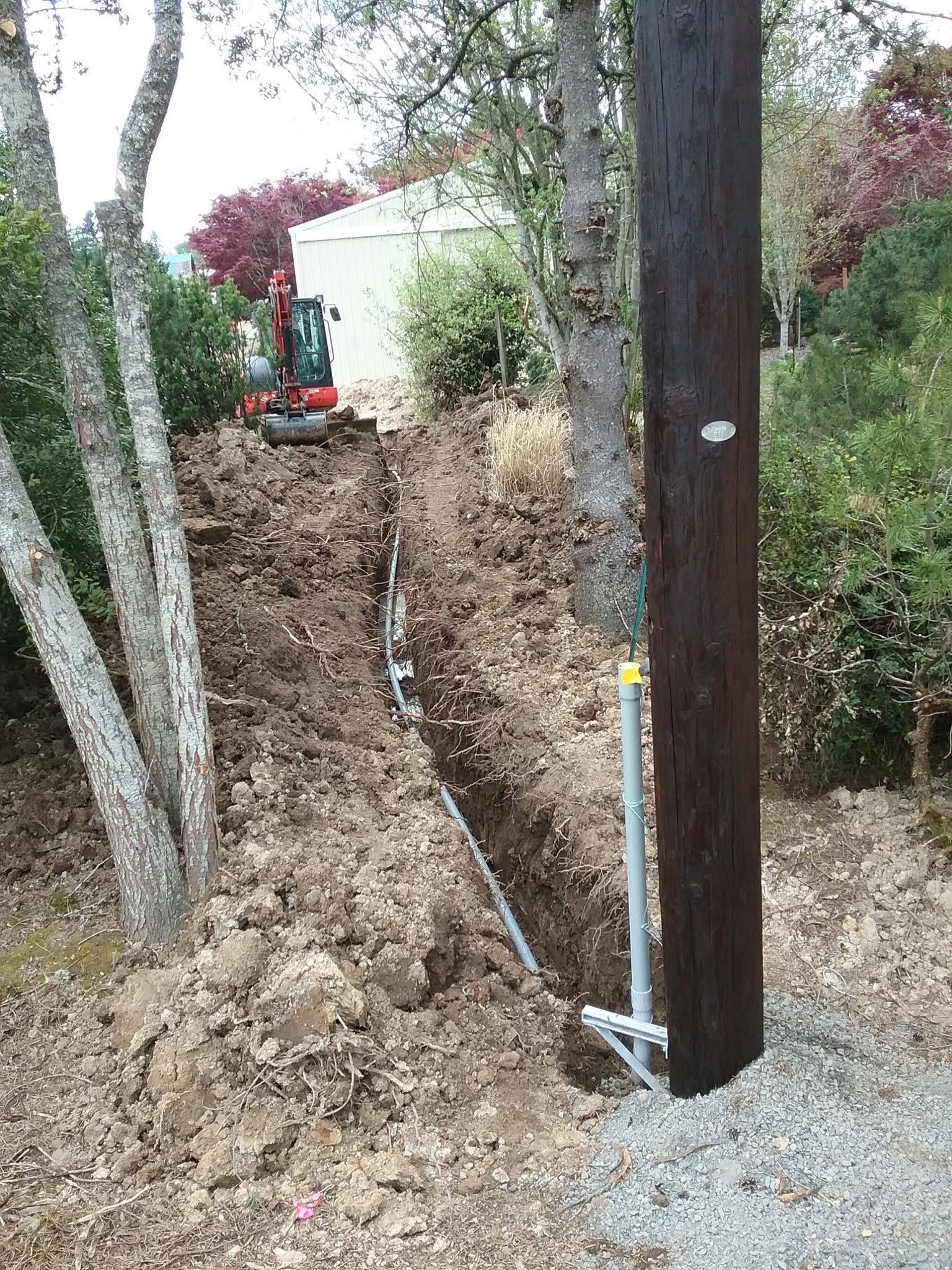
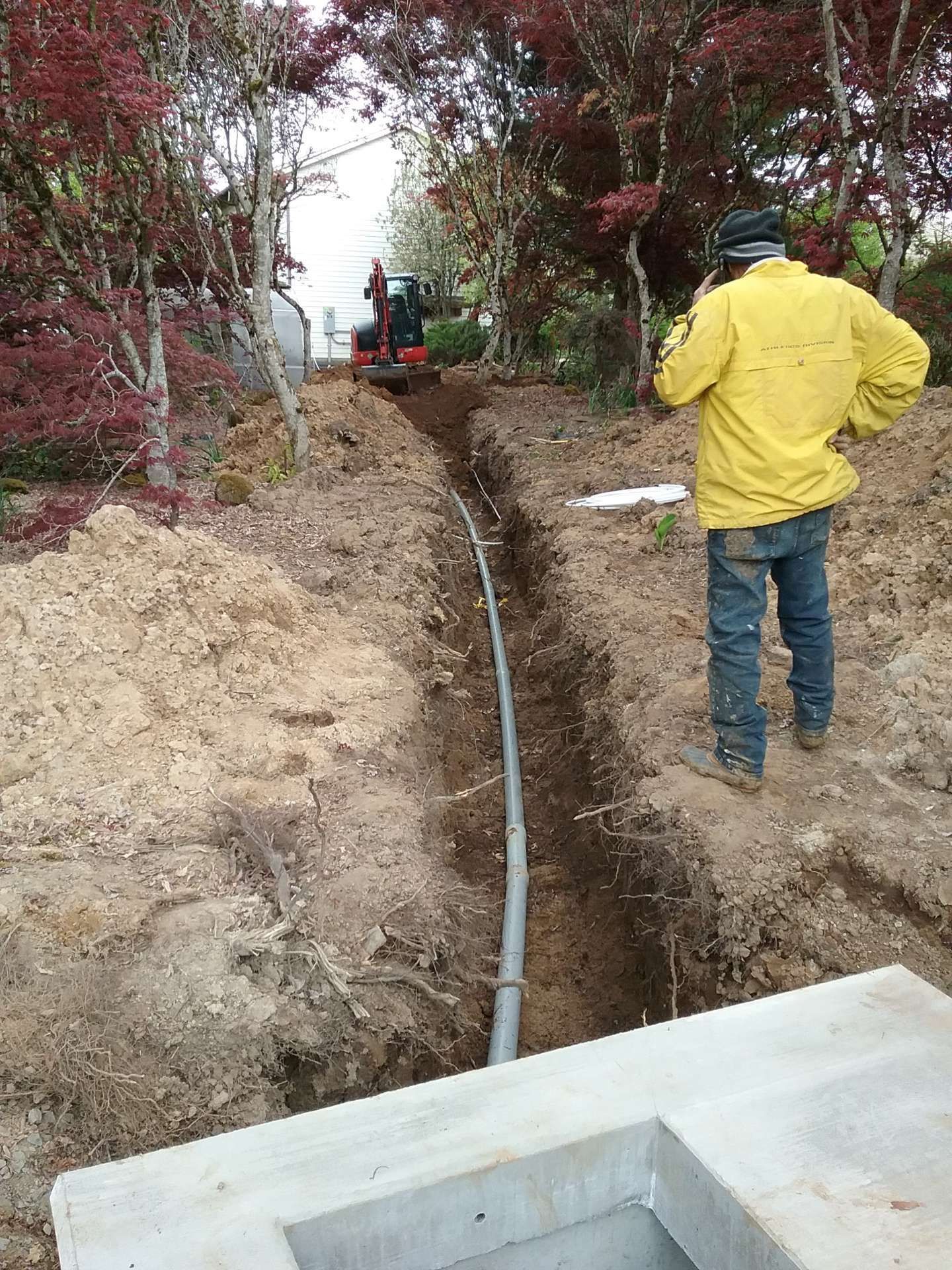
Completed utility trenches appear as clean, straight cuts with stable walls and floor grades that match utility installation specifications. Backfilling occurs after utility placement and inspection, with material compacted in lifts to prevent settling that creates surface depressions, driveway sags, or foundation movement over time. Proper trenching establishes routing that avoids future conflicts when landscaping, fencing, or additional site improvements require digging near the original utility path.
Trenching projects coordinate with broader construction schedules, often running parallel to foundation work, site grading, or driveway installation that shares equipment mobilization and earthwork efficiency. Timberline's construction background enables coordination across excavation phases rather than treating trenching as an isolated task disconnected from the overall project flow.
Answers to Frequent Service Questions
Utility trenching details depend on the specific utilities being routed and the property conditions that affect excavation and backfill procedures.
What determines utility trench depth and width?
Utility type dictates minimum cover depth and trench width, with electrical conduit, water lines, sewer pipes, and gas lines each governed by code requirements that specify how deep the trench must extend and how much clearance installers need for proper bedding, connection, and inspection before backfilling occurs.
How does trenching coordinate with utility installation services?
Trenching creates the excavated pathway, while licensed utility contractors handle the actual installation, connection, and testing of electrical, plumbing, gas, or communication systems, with trenching scheduled to complete just ahead of utility placement to minimize open-trench duration and weather exposure.
What happens to the excavated soil during trenching?
Material removed during trenching typically remains on site for backfill after utility installation, though rocky, contaminated, or excess soil may require hauling off-site and replacement with clean fill or specified bedding material that provides proper support and drainage around buried utilities.
When is utility trenching scheduled during construction?
Trenching timing depends on whether utilities serve new construction or existing structures, with new builds scheduling trenching after foundation excavation and before concrete work, while retrofit projects coordinate trenching around occupied structures and active landscaping that require protection during excavation and restoration after backfilling.
How do soil conditions in Sandy affect trenching work?
Sandy and surrounding Clackamas County areas present variable clay, gravel, and seasonal groundwater that influence trench wall stability, equipment selection, and whether dewatering or temporary shoring becomes necessary to maintain safe working conditions for utility installers who enter trenches to complete connections.
Timberline Construction LLC operates as an owner-run contractor with construction experience dating to the 1970s, bringing hands-on oversight to trenching projects that keeps work aligned with utility installation schedules and site preparation requirements. Schedule a free consultation to discuss your property's utility trenching needs and coordinate excavation with your construction or infrastructure project.